

Amyotrophic lateral sclerosis (ALS) is a progressive neurological disease that damages the motor neurons responsible for voluntary muscle movement. As the condition progresses, patients may experience muscle weakness, stiffness, cramps, pain, sleep problems, appetite loss, swallowing difficulties, and other symptoms that can affect comfort and quality of life. Medical marijuana for ALS may offer another option for managing some of these symptoms.
Research suggests cannabinoids may help with certain ALS symptoms, particularly spasticity. Patient-reported studies have also identified potential benefits for pain, sleep, appetite, cramps, drooling, and quality of life. However, medical marijuana has not been proven to cure ALS or slow the underlying disease.
This guide explains what ALS is and how it can affect your daily life. You’ll learn what clinical research reveals about medical marijuana for ALS symptoms, including spasticity, pain, muscle cramps, sleep problems, appetite loss, and drooling. We also cover qualifying conditions by state so you can understand whether ALS may qualify you for a medical marijuana card where you live.
The science behind medical marijuana for ALS is still developing. Cannabis should not replace neurological care, prescribed ALS treatment, respiratory support, nutritional care, or rehabilitation. Let’s examine where the evidence is strongest and how medical cannabis may fit into a broader symptom-management plan.
What Is ALS? Understanding Medical Marijuana for ALS Treatment
Amyotrophic lateral sclerosis, commonly called ALS or Lou Gehrig’s disease, is a progressive neurodegenerative condition that damages motor neurons in the brain and spinal cord.
Motor neurons carry signals from the brain and spinal cord to muscles throughout the body. As these nerve cells become damaged, muscles gradually become weaker and less able to perform normal movements.
ALS can begin differently from one person to another. Some people first notice weakness in a hand, arm, leg, or foot. Others develop speech or swallowing problems first.
Definition of ALS
ALS is a progressive neurological disease that affects voluntary muscle movement. It does not affect every person in exactly the same way, and the rate of progression can vary significantly.
As motor neurons become damaged, muscles lose the signals needed for normal movement. Over time, weakness may affect mobility, communication, swallowing, and breathing.
ALS currently has no cure. Treatment focuses on slowing disease progression where possible, maintaining function, managing symptoms, and supporting quality of life.
Medical marijuana is being investigated primarily as a symptom-management option, not as a cure or replacement for established ALS treatment.
Common Symptoms of ALS
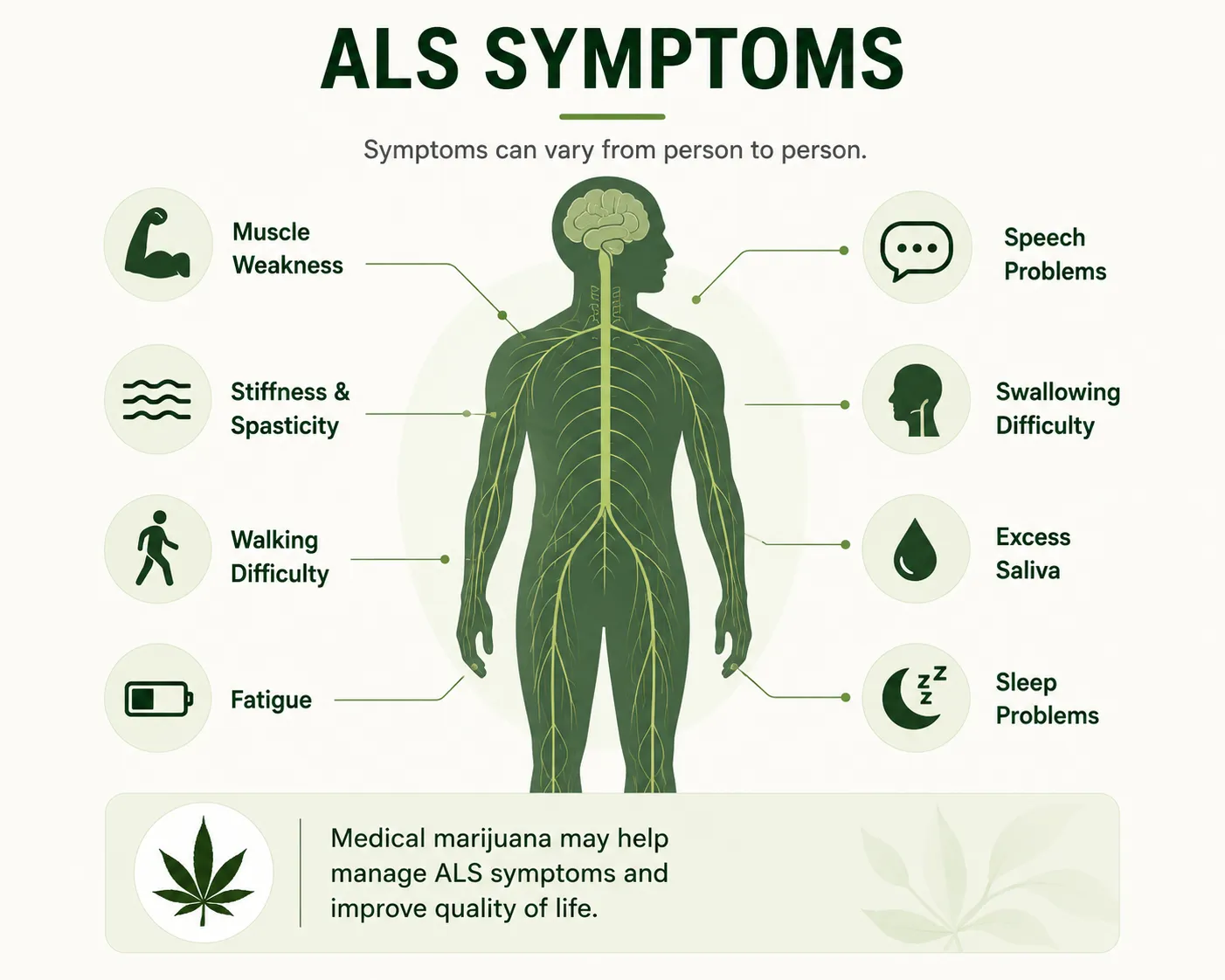
ALS symptoms can affect movement, communication, eating, sleep, and everyday activities.
Common symptoms include:
-
Muscle weakness
-
Muscle twitching or fasciculations
-
Muscle cramps
-
Muscle stiffness and spasticity
-
Difficulty walking
-
Difficulty with fine motor tasks
-
Dropping objects
-
Slurred or difficult speech
-
Difficulty swallowing
-
Excess saliva or drooling
-
Fatigue
-
Pain
-
Sleep disruption
-
Appetite or weight changes
-
Breathing difficulties as the disease progresses
Symptoms can begin in one area and spread to other parts of the body.
How ALS Affects Daily Life
ALS can gradually make everyday activities more difficult. Muscle weakness may interfere with walking, dressing, bathing, cooking, writing, or using a phone.
Spasticity and cramps can make movement uncomfortable. Pain may become more difficult to manage as mobility decreases. Speech and swallowing problems can affect communication and nutrition.
Sleep may also become disrupted by pain, muscle cramps, stiffness, difficulty changing position, anxiety, or respiratory symptoms.
As symptoms progress, many people with ALS need support from a multidisciplinary healthcare team. Neurologists, physical therapists, occupational therapists, speech-language pathologists, respiratory specialists, dietitians, and palliative care professionals may all contribute to care.
Medical marijuana should fit within this larger treatment plan rather than replace it.
How Medical Marijuana May Help With ALS Symptoms
The potential role of medical marijuana in ALS is primarily focused on symptom relief.
Cannabis contains cannabinoids such as THC and CBD. These compounds interact with the body’s endocannabinoid system, which plays a role in processes including pain signaling, muscle activity, appetite, sleep, and mood.
Research into medical marijuana for ALS is still limited, but several symptoms have received particular attention.
Medical Marijuana and ALS Spasticity
Spasticity is one of the most studied potential applications of cannabinoids in ALS.
Spasticity causes muscles to become stiff, tight, or difficult to control. It can interfere with walking, transfers, positioning, personal care, and sleep.
In the CANALS trial, a multicenter, double-blind, randomized, placebo-controlled phase 2 study, Riva et al. evaluated nabiximols, an oral spray containing standardized amounts of THC and CBD, in people with motor neuron disease. After six weeks, participants receiving nabiximols experienced a significantly greater improvement in spasticity than those receiving placebo.
The researchers described the findings as proof of concept and noted that additional research was needed.
Real-world research has produced similar signals. Turri et al. evaluated THC:CBD treatment for spasticity in people with ALS and found that patients generally reported high treatment satisfaction, particularly those with moderate-to-severe spasticity. Because the study was observational, however, it cannot prove that cannabis caused the reported improvements.
The evidence therefore suggests that spasticity is one of the ALS symptoms for which cannabinoids have some of the strongest clinical support.
Medical Marijuana and ALS Pain
Pain can become a significant problem as ALS progresses.
Muscle cramps, stiffness, reduced mobility, prolonged positioning, and strain on joints can all contribute to discomfort.
ALS-specific research on cannabis and pain is limited. However, early patient research provides some useful information.
In a survey of 131 people with ALS, Amtmann et al. found that 13 respondents had used cannabis during the previous year. Those participants reported moderate effectiveness for several symptoms, including pain, appetite loss, spasticity, depression, and drooling.
Cannabis was not reported to improve speech or swallowing difficulties.
The small number of cannabis users limits how confidently these findings can be generalized. Still, the research helps explain why some people with ALS explore medical marijuana as part of a broader pain-management plan.
Cannabis should not replace an evaluation of the underlying cause of pain or established treatments recommended by your healthcare team.
Medical Marijuana and ALS Muscle Cramps
Muscle cramps are common in ALS and can be painful enough to interfere with movement, rest, and sleep.
Because cannabinoids can influence both muscle activity and pain signaling, researchers have investigated whether THC:CBD therapies may help motor-neuron-disease-related symptoms.
The evidence for cramps specifically is less developed than the evidence for spasticity. However, patient-reported research provides a reason for continued investigation.
In a survey of people with ALS, Lacroix et al. found that patients using cannabis reported benefits for several motor symptoms, including rigidity, cramps, and fasciculations. Participants also reported potential improvements in sleep quality, pain, emotional state, and quality of life.
Because this was a questionnaire-based study rather than a randomized clinical trial, the findings describe patient experience rather than proving that cannabis caused the improvements.
Medical Marijuana and ALS Sleep Problems
Sleep disruption can occur for several reasons in ALS.
Pain, muscle cramps, spasticity, difficulty changing position, anxiety, and respiratory symptoms can all make sleep more difficult.
Some people with ALS report using cannabis to improve sleep. In the survey by Lacroix et al., patients reported benefits involving sleep quality as well as pain, emotional state, and quality of life.
However, sedation is not automatically beneficial.
People with advanced ALS may already experience significant fatigue, weakness, mobility problems, or respiratory impairment. A sedating cannabis product could add to these concerns.
If sleep problems are caused by nighttime breathing difficulties, medical evaluation is more important than simply using cannabis to induce sleep.
Medical Marijuana and ALS Appetite Loss
Maintaining adequate nutrition is an important part of ALS care.
Some patients experience appetite loss or unintentional weight loss. Others may struggle to eat enough because chewing and swallowing become increasingly difficult.
Earlier research found that some people with ALS reported improved appetite after cannabis use. In the survey by Amtmann et al., cannabis users reported moderate improvement in appetite loss.
THC can increase appetite in some people. However, cannabis should not replace nutritional management.
Weight loss in ALS can have several causes, including dysphagia, fatigue, difficulty preparing meals, and increased energy needs. A neurologist and dietitian can help identify the cause and determine the most appropriate nutritional strategy.
Medical Marijuana and ALS Drooling
Excess saliva, or sialorrhea, can affect people with ALS when weakened swallowing muscles make it harder to clear saliva.
Some patient-reported research suggests cannabis may help.
In the early ALS cannabis survey, participants reported moderate improvement in drooling. However, the evidence came from a small observational sample and does not establish cannabis as an effective treatment for sialorrhea.
Patients experiencing persistent or severe drooling should discuss established treatment options with their ALS care team.
Can Medical Marijuana Slow ALS Progression?
This is one of the most important questions surrounding medical marijuana for ALS.
There is currently no strong clinical evidence that medical marijuana slows, stops, or reverses ALS progression.
Cannabinoids have attracted interest because laboratory and animal studies have investigated their possible antioxidant, anti-inflammatory, and neuroprotective effects.
But promising preclinical findings do not establish that cannabis changes the course of ALS in humans.
A review by Giacoppo and Mazzon found that much of the evidence suggesting cannabinoids could delay disease progression or prolong survival came from animal models. Clinical research had primarily focused on symptom management rather than changing disease progression.
More recent research has continued to examine real-world medical marijuana use among people with ALS.
In a retrospective cohort study, Velazquez et al. evaluated medical marijuana use among patients with ALS and examined symptoms including pain, poor appetite, anxiety, spasticity, insomnia, body mass index, and ALS functional scores. The study found associations between medical marijuana use and short-term improvements in some symptoms, including pain, appetite, and anxiety.
However, the study was observational. Patients using medical marijuana had greater symptom burden and faster progression at baseline, so the findings cannot establish that cannabis caused either the improvements or the differences in disease progression.
The researchers called for randomized controlled trials.
The evidence therefore supports a cautious conclusion: medical marijuana may help manage selected ALS symptoms, but it should not be presented as a disease-modifying treatment.
What the Research Says About Medical Marijuana for ALS
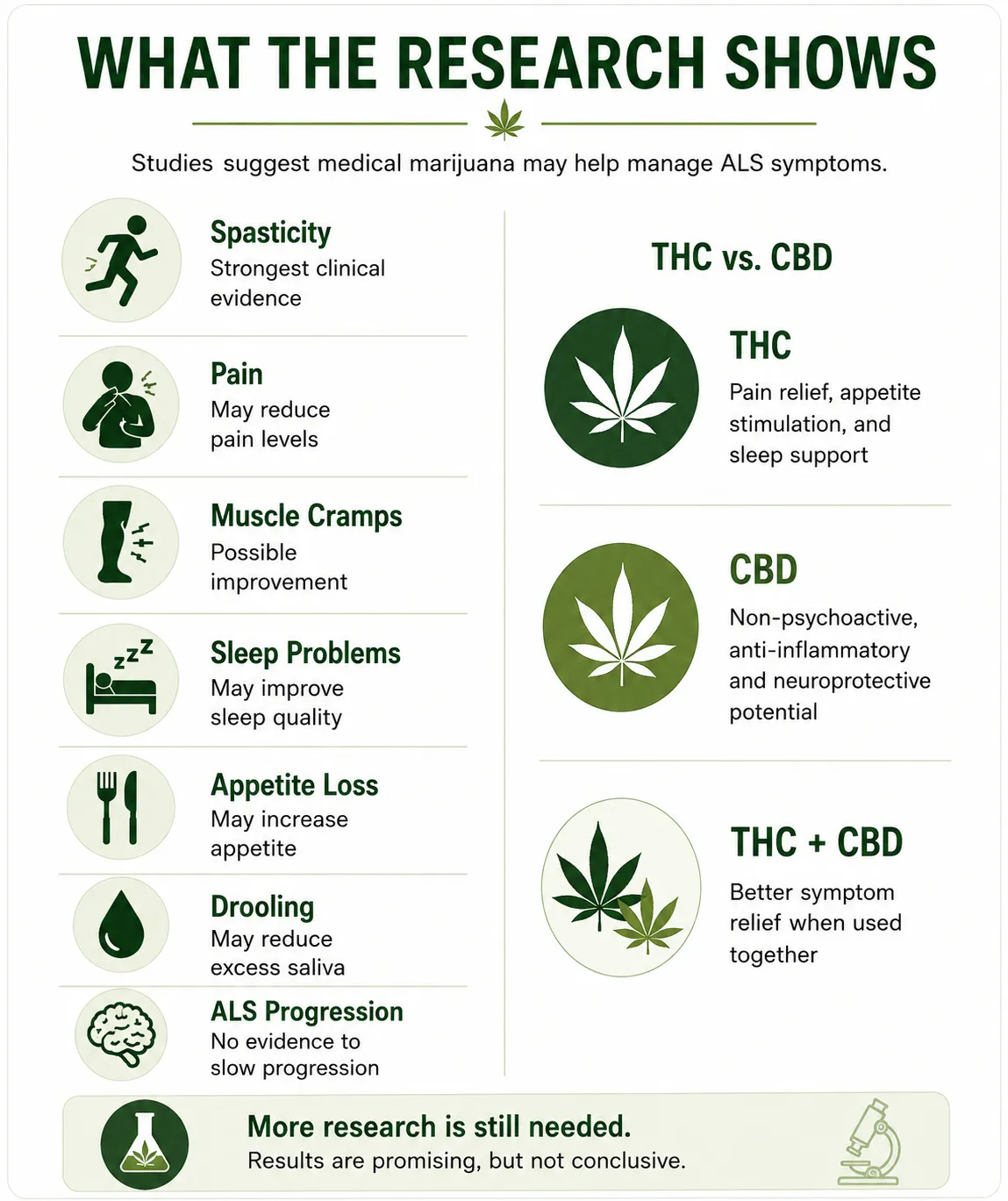
The evidence varies significantly depending on the symptom being treated.
| Symptom | Current evidence |
|---|---|
| Spasticity | Strongest ALS-specific clinical evidence. THC:CBD treatment improved spasticity in a randomized trial. |
| Muscle cramps | Patient-reported benefits exist, but more controlled research is needed. |
| Pain | Some patients report relief, but controlled ALS-specific evidence remains limited. |
| Sleep | Some patients report better sleep, but sedation and respiratory concerns matter. |
| Appetite loss | Patient surveys suggest possible improvement, particularly with THC-containing cannabis. |
| Drooling | Some patient-reported improvement, but evidence remains limited. |
| ALS progression | Cannabis has not been proven to slow or reverse disease progression. |
What the Research Does Not Prove
The research does not prove that cannabis cures ALS.
It does not prove that cannabis reverses motor-neuron damage. It does not prove that cannabis is superior to established ALS medications or supportive treatments. It does not prove that every person with ALS will benefit from medical marijuana.
What the research does suggest is that cannabinoids may help some patients manage specific symptoms, particularly spasticity.
More high-quality clinical trials are needed to determine which cannabinoids, doses, formulations, and patients are most likely to benefit.
State Eligibility for Medical Marijuana for ALS
Access to medical marijuana for ALS varies by state.
Some states specifically list ALS as a qualifying condition. Others use broader categories such as debilitating or chronic conditions, neurological diseases, or physician discretion.
Understanding your state’s requirements is the first step toward legal access.
LeafyRX provides a medical marijuana qualifying conditions by state guide to help patients understand potential eligibility.
States That Recognize ALS
ALS is specifically recognized as a qualifying condition in multiple state medical cannabis programs.
Examples include:
-
Arizona
-
Arkansas
-
Connecticut
-
Delaware
-
Florida
-
Georgia
-
Hawaii
-
Illinois
-
Iowa
-
Maine
-
Massachusetts
-
Michigan
-
Minnesota
-
Mississippi
-
Missouri
-
New Hampshire
-
New Jersey
-
New Mexico
-
North Dakota
-
Ohio
-
Pennsylvania
-
South Dakota
-
Texas
-
Utah
-
Virginia
-
West Virginia
Other states may provide eligibility through broader qualifying categories or physician discretion.
For example, some programs allow physicians to recommend medical cannabis for debilitating conditions they believe may benefit from treatment, even when ALS is not specifically named.
State laws change, so patients should verify current requirements before applying.
State-by-State Eligibility Requirements
State programs may require different forms of documentation.
Depending on where you live, you may need:
-
Documentation of an ALS diagnosis
-
Medical records
-
Physician certification
-
Proof of state residency
-
Government-issued identification
-
A state application
-
An application fee
-
Caregiver information, if applicable
Some states also have age or registration requirements.
Having an ALS diagnosis does not automatically mean you can purchase medical cannabis. A licensed physician must determine whether you qualify under your state’s rules.
State Resources and Qualification Guidelines
Patients should review the current requirements for their state before beginning the application process.
LeafyRX’s medical marijuana qualifying conditions by state resource provides a starting point for understanding which conditions qualify and what state-specific pathways may apply.
Patients should also discuss medical marijuana side effects before starting treatment.
Cannabis is not risk-free. Understanding potential side effects helps you make an informed decision about whether it belongs in your symptom-management plan.
How to Get a Medical Marijuana Card for ALS
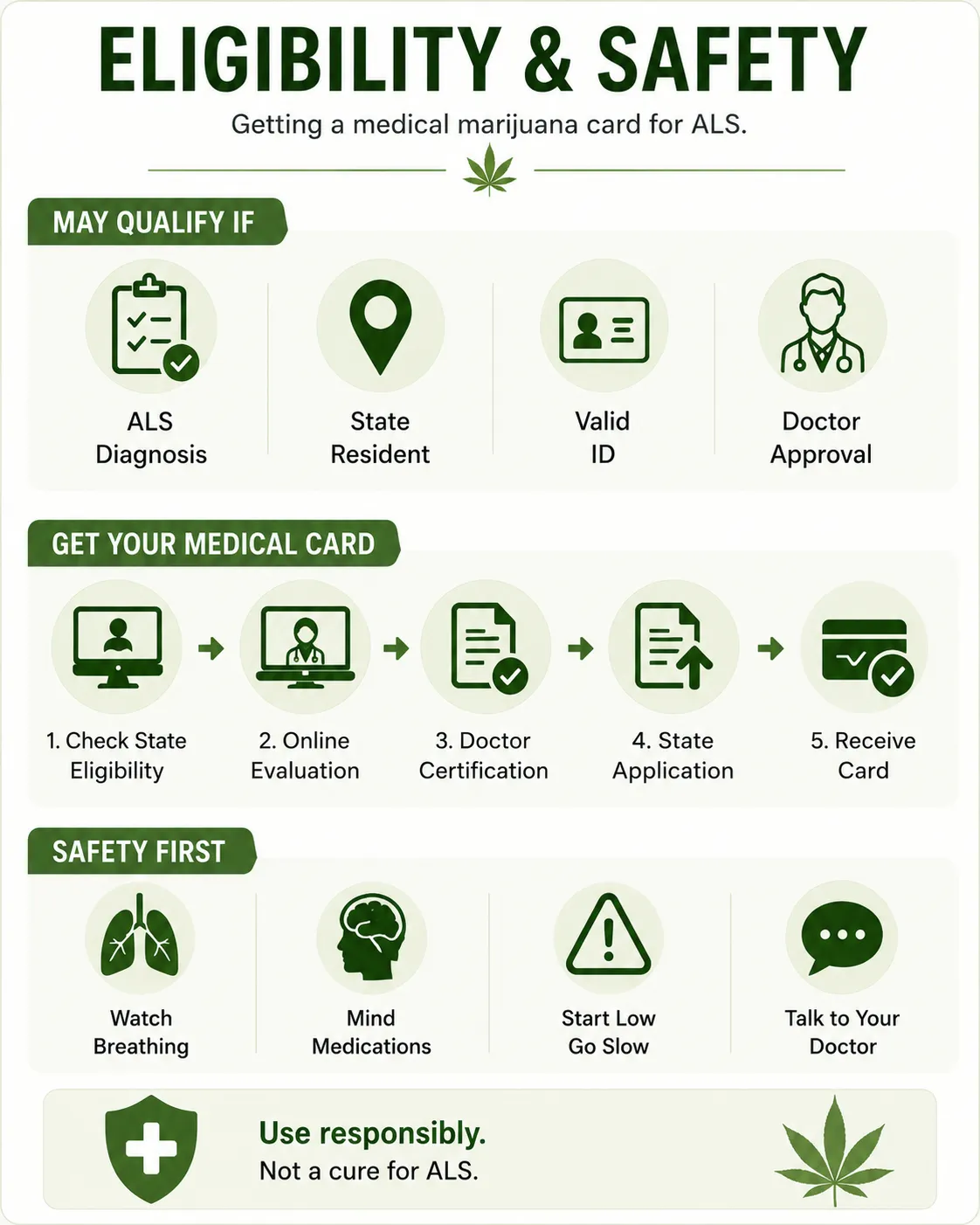
Getting a medical marijuana card for ALS can be simpler than many patients expect.
If your state permits telehealth medical cannabis evaluations, you may be able to complete your physician consultation online rather than traveling to a clinic.
The process usually involves checking your eligibility, gathering medical documentation, completing a physician evaluation, receiving certification if approved, and completing your state’s registration.
1. Check Your State Eligibility
Not every state uses the same qualifying-condition list.
Some states specifically name ALS. Others provide access through broader categories such as debilitating medical conditions or physician discretion.
Start by checking your state’s current medical marijuana requirements.
LeafyRX’s medical marijuana qualifying conditions by state resource can help you determine where to start.
2. Book an Online Evaluation
If your state permits telehealth certification, you can schedule an online evaluation with a licensed medical professional.
The consultation can be completed using a phone, tablet, or computer with an internet connection.
This can be particularly useful for people with ALS who experience mobility limitations, fatigue, transportation challenges, or frequent medical appointments.
3. Complete Your Physician Consultation
During the consultation, the physician reviews your medical history, diagnosis, symptoms, current medications, and treatment goals.
Be prepared to discuss:
-
Your ALS diagnosis
-
Current symptoms
-
Existing treatments
-
Current medications
-
Any cannabis use
-
Other medical conditions
-
Your goals for symptom management
The physician’s role is not simply to confirm your diagnosis. They must determine whether medical marijuana is medically appropriate and permitted under your state’s requirements.
4. Submit Your State Application
If the physician determines that you qualify, they can complete the certification required by your state.
You may then need to submit your application through your state’s medical cannabis program.
Depending on the state, you may upload:
-
Physician certification
-
Proof of residency
-
Government-issued identification
-
Photograph
-
Additional medical documentation
You may also need to pay a state registration fee.
5. Receive Your Medical Marijuana Card
Processing times vary by state.
Some programs provide temporary authorization while an application is being processed. Others issue an electronic or physical medical marijuana card after approval.
Once approved, you can purchase medical cannabis according to your state’s rules.
Possession limits, product types, dispensary access, renewal requirements, and purchase limits vary by state.
For a complete walkthrough, see how to get your medical marijuana card.
THC vs. CBD for ALS
THC and CBD are the two cannabinoids most commonly discussed when considering medical marijuana for ALS.
THC
THC is the primary intoxicating cannabinoid in cannabis.
It may influence:
-
Pain
-
Appetite
-
Sleep
-
Muscle symptoms
It can also cause:
-
Drowsiness
-
Dizziness
-
Impaired coordination
-
Increased heart rate
-
Anxiety
-
Cognitive effects
CBD
CBD does not produce the same intoxicating effects as THC.
It is being studied for neurological symptoms, pain, anxiety, inflammation, and other potential therapeutic applications.
CBD is not risk-free, however. It can interact with prescription medications and may affect how the body processes certain drugs.
THC and CBD Together
Some of the most relevant clinical ALS research has involved a combination of THC and CBD.
In the CANALS trial, Riva et al. studied nabiximols, a standardized THC:CBD formulation, and found an improvement in spasticity compared with placebo.
That does not mean every person with ALS should use a THC:CBD product.
The appropriate cannabinoid profile depends on your symptoms, medications, medical history, tolerance, and state regulations.
Medical Marijuana for ALS: Risks, Side Effects, and Who Should Use Caution
Medical marijuana can cause side effects and may not be appropriate for everyone with ALS.
Potential effects include:
-
Drowsiness
-
Dizziness
-
Dry mouth
-
Impaired coordination
-
Changes in attention or memory
-
Increased heart rate
-
Anxiety
-
Confusion
-
Sedation
These effects can be especially important for people with ALS because weakness, fatigue, mobility problems, swallowing difficulties, and respiratory impairment may already be present.
ALS and Respiratory Function
Respiratory muscle weakness can become a serious concern as ALS progresses.
If you have reduced respiratory function or use assisted ventilation, speak with your healthcare team before using cannabis, particularly products that may cause significant sedation.
Do not assume that a cannabis product is appropriate simply because it is legal in your state.
ALS and Swallowing Problems
Difficulty swallowing, or dysphagia, is common in ALS.
If swallowing has become difficult, discuss cannabis product forms with your healthcare provider. Some products may be difficult or unsafe to swallow.
Your healthcare team can also help determine whether nutritional support or other dysphagia interventions are needed.
Cannabis and ALS Medications
Cannabinoids can interact with prescription medications.
Tell your healthcare provider about every medication, supplement, and cannabis product you use.
This is particularly important if you take medications for:
-
ALS disease management
-
Spasticity
-
Pain
-
Anxiety
-
Sleep
-
Depression
-
Seizures
-
Other neurological conditions
Never stop or change prescribed ALS treatment because you are considering medical marijuana.
Combining Medical Marijuana With Your ALS Treatment
Medical marijuana should complement, rather than replace, established ALS care.
Your treatment plan may include disease-directed medications, physical and occupational therapy, speech and swallowing support, respiratory care, nutritional management, assistive devices, and palliative care.
If cannabis is added to that plan, your healthcare providers should know about it.
This allows them to monitor for:
-
Excessive sedation
-
Medication interactions
-
Changes in mobility
-
Changes in appetite or weight
-
Respiratory concerns
-
Changes in swallowing
-
Other adverse effects
The goal is not to add another treatment simply because it is available.
The goal is to determine whether cannabis provides enough symptom relief to justify its potential risks for your individual situation.
Why Patients Choose an Online Medical Card Evaluation
For eligible patients, getting evaluated for medical marijuana does not necessarily require a trip to a physical clinic.
This can be particularly valuable for people with ALS who may have mobility limitations, fatigue, transportation difficulties, or frequent healthcare appointments.
LeafyRX provides an online pathway that connects eligible patients with licensed medical professionals who can evaluate whether medical cannabis may be appropriate under their state’s requirements.
The process is designed to make medical cannabis evaluation more convenient while keeping the medical decision with a licensed professional.
Conclusion
Medical marijuana for ALS may offer another option for managing symptoms that affect comfort and quality of life.
The strongest ALS-specific clinical evidence currently involves spasticity, while patient-reported research suggests potential benefits for pain, cramps, sleep, appetite, drooling, and other symptoms.
But cannabis is not a cure for ALS.
It has not been proven to reverse motor-neuron damage, stop disease progression, or replace established ALS treatment. More high-quality clinical research is needed to determine exactly which patients are most likely to benefit.
If you are considering medical marijuana as part of your ALS symptom-management plan, start with a proper medical evaluation.
LeafyRX connects eligible patients with licensed medical professionals who can assess your condition and explain whether you may qualify under your state’s medical cannabis program.
Find out whether you qualify for a medical marijuana card in your state. Connect with a licensed medical marijuana doctor online and get started from home.





 Ask ChatGPT
 Ask Claude
 Ask Perplexity