

Tourette syndrome (TS) is a neurological condition characterized by repeated motor and vocal tics that can affect movement, speech, concentration, social activities, and daily life. Medical marijuana is being studied because cannabinoids may influence tic severity and the uncomfortable urges that can occur before a tic, but current evidence is not strong enough to consider cannabis an established treatment. A 2026 systematic review and meta-analysis found promising reductions in tic severity and premonitory urges while emphasizing the need for larger, placebo-controlled trials.
Whether Tourette syndrome qualifies for a medical marijuana card depends on your state. Some states specifically list Tourette syndrome, while others allow physician discretion or broader qualifying conditions. Check LeafyRX’s qualifying conditions by state resource before starting the application process.
-
Medical marijuana may help manage some tic-related symptoms, but it has not been established as a cure for Tourette syndrome.
-
Spasticity is not the main Tourette symptom; the research focus is on motor and vocal tics and premonitory urges.
-
Some adults in randomized trials have experienced reductions in tic severity with THC-containing or THC/CBD treatments.
-
A 2026 systematic review and meta-analysis found reductions in tic severity and premonitory urges across the studies reviewed, but called for larger placebo-controlled trials.
-
Tourette syndrome commonly occurs alongside ADHD, OCD, anxiety, depression, and sleep problems, and these symptoms may require separate treatment.
-
THC can cause cognitive and other side effects, so potential benefits should be weighed against risks and medication interactions.
-
Tourette syndrome is specifically listed as a qualifying condition in some state medical cannabis programs, while other states use broader eligibility pathways.
-
Medical marijuana should not automatically replace behavioral therapy, prescription treatment, or other care recommended for Tourette syndrome.
What Is Tourette Syndrome?
Tourette syndrome is a neurodevelopmental condition involving repeated motor and vocal tics. It commonly begins during childhood or adolescence, although the way symptoms appear can vary substantially from one person to another.
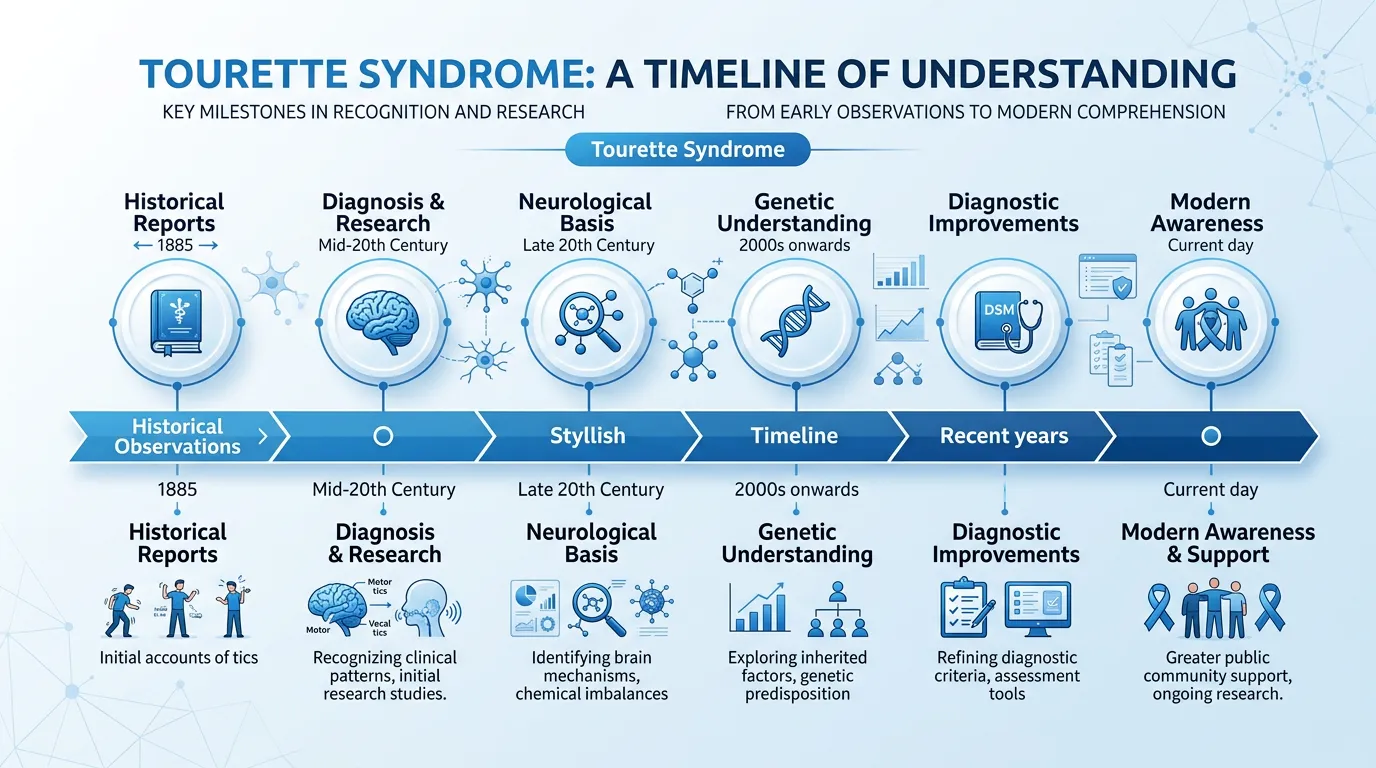
Tics are sudden, repeated movements or sounds that can be difficult to suppress. They may become more noticeable during periods of stress, excitement, fatigue, or other emotional or physical changes. They can also decrease or disappear for periods of time.
The diagnosis is based on the pattern and duration of tics and a clinical assessment. Tourette syndrome is different from having an occasional involuntary movement or sound. The condition involves a broader pattern of motor and vocal tics over time.
What Are Motor and Vocal Tics?
Motor tics involve movements of the body. Common examples include eye blinking, facial movements, head jerking, shoulder shrugging, arm movements, touching objects, and repeated body movements.
Vocal tics involve sounds or words. Examples include throat clearing, sniffing, coughing, grunting, repeating sounds, repeating words, or making other involuntary noises.
Not everyone with Tourette syndrome has the same tics. One tic may become less frequent while another becomes more prominent. Some people experience relatively mild tics, while others experience symptoms that interfere with school, work, relationships, sleep, or other daily activities.
What Is a Premonitory Urge?
Some people with Tourette syndrome experience a premonitory urge before a tic. This may feel like pressure, tension, an itch, discomfort, or an internal need to perform a particular movement or sound.

The tic may temporarily relieve the sensation. For some people, the urge itself is distressing even when the resulting tic is relatively mild.
A meta-analysis of studies involving people with tic disorders found a positive relationship between premonitory-urge severity and tic severity. This is one reason researchers study premonitory urges separately from the tics themselves.
Tourette Syndrome and Comorbid Conditions
Tourette syndrome often occurs alongside other conditions. ADHD, obsessive-compulsive disorder (OCD), anxiety, depression, and sleep problems are among the symptoms and diagnoses that may occur with Tourette syndrome.
These associated symptoms can sometimes create more functional impairment than the tics. Someone may have manageable tics but still struggle with concentration, intrusive thoughts, anxiety, sleep, or emotional regulation.
This matters when discussing medical marijuana because a product that changes tic frequency may not necessarily improve every associated symptom. Each concern needs to be considered on its own merits.
How Medical Marijuana May Help Tourette Syndrome
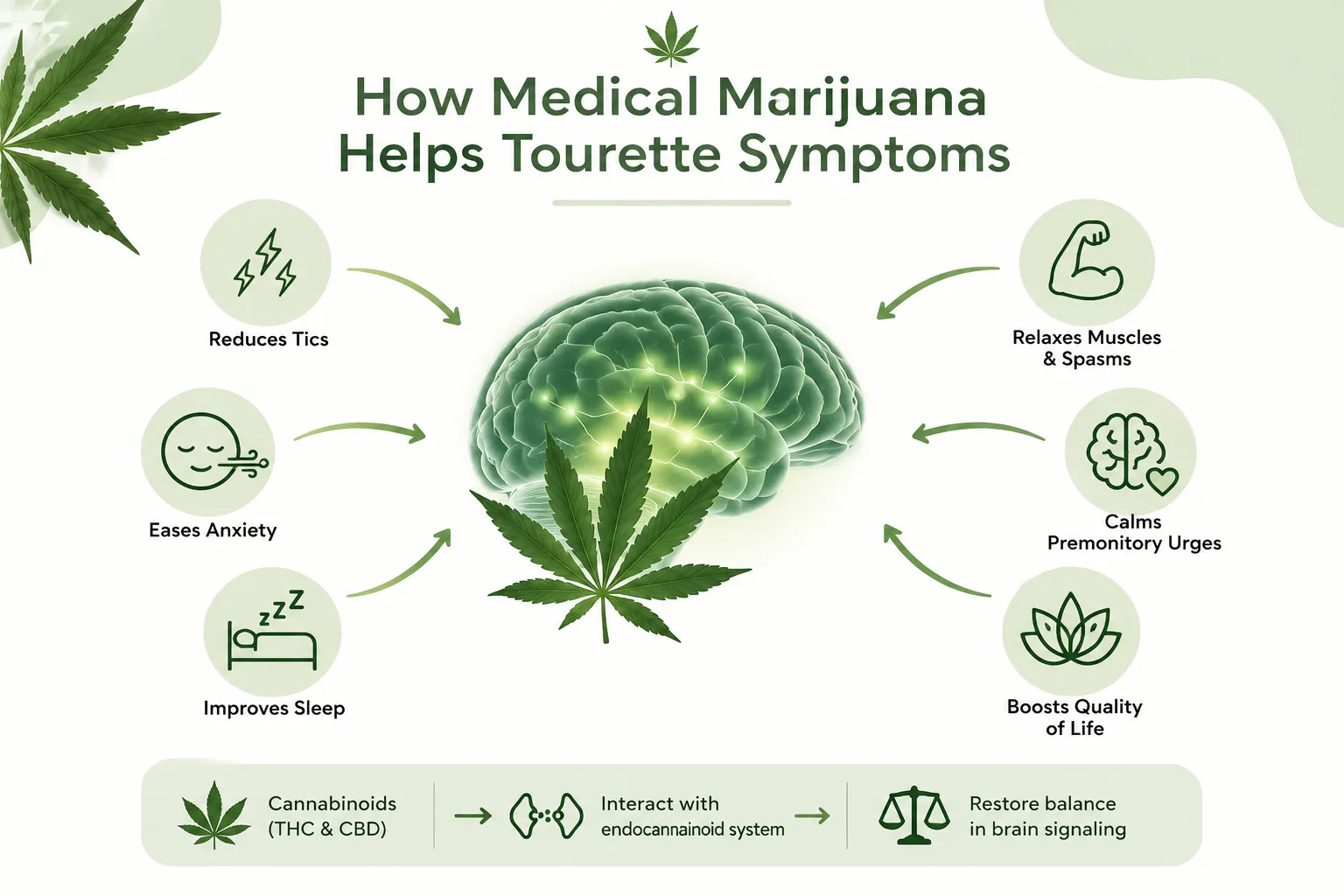
Interest in medical marijuana for Tourette syndrome comes partly from the role of the endocannabinoid system in the central nervous system. THC and CBD interact with cannabinoid receptors and other signaling pathways that may influence movement, sensory processing, mood, and other neurological functions.
Researchers have therefore investigated whether cannabinoids can reduce tics, premonitory urges, or related symptoms. The clinical evidence is still developing and is not as extensive as the evidence for established Tourette treatments.
Studies have used different products, doses, treatment periods, and outcome measures. This makes it difficult to determine whether one cannabinoid, formulation, or dose is consistently better than another.
Medical Marijuana and Tic Severity
Tic reduction is the main area of cannabis research in Tourette syndrome.
In a six-week randomized, double-blind, placebo-controlled trial, Müller-Vahl and colleagues evaluated up to 10 mg per day of THC in 24 people with Tourette syndrome. Several tic-rating measures showed a significant difference or a trend toward improvement during treatment compared with placebo. The study was small, however, and several participants did not complete the study.
More recent evidence comes from a 2023 randomized crossover trial by Mosley and colleagues. The study included 22 adults with severe Tourette syndrome and tested an oral oil containing equal concentrations of THC and CBD. After six weeks, tic severity was lower during active treatment than placebo on the Yale Global Tic Severity Scale.
The study also reported cognitive adverse effects, including slowed thinking, memory lapses, and poor concentration. This is important when interpreting the results: a potential reduction in tics has to be considered alongside the possibility of unwanted effects.
Overall, randomized research provides a signal that THC-containing treatment may reduce tic severity in some adults. It does not establish that cannabis works for every person with Tourette syndrome.
Medical Marijuana and Premonitory Urges
Premonitory urges are another important research target. A person may experience a strong urge or uncomfortable sensation before a tic, and reducing that urge could potentially affect how disruptive the tic disorder feels.
A 2024 systematic review and meta-analysis of cannabis-based medicines in adults with Tourette syndrome reported reductions in both tic severity and premonitory urges across the studies it analyzed.
A 2026 systematic review and meta-analysis in Neuroscience included eight studies in its systematic review and seven studies involving 306 adults in the meta-analysis. The researchers reported significant reductions in Yale Global Tic Severity Scale and Premonitory Urge for Tics Scale scores.
The 2026 authors nevertheless emphasized that larger, placebo-controlled studies are needed to confirm efficacy, establish safety, and determine optimal dosing. The results are promising, but they should not be interpreted as proof that cannabis is an established Tourette treatment.
Medical Marijuana and Anxiety
Anxiety can occur alongside Tourette syndrome and may become more noticeable when tics interfere with school, work, relationships, or social activities.
The randomized THC/CBD trial in adults with severe Tourette syndrome included anxiety among its secondary outcomes. The findings suggested possible improvements in some associated symptoms, but the study was small and was primarily designed around tic severity.
Broader reviews of medicinal cannabis and mental health also show that effects vary by cannabinoid, dose, and condition. THC can sometimes worsen anxiety, especially at higher doses, so it should not be assumed to be an anxiety treatment.
If anxiety is one of the main concerns, it is worth discussing that symptom separately with a healthcare professional rather than assuming that a potential effect on tics will translate into anxiety relief.
Medical Marijuana and OCD Symptoms
OCD symptoms are common among people with Tourette syndrome. These can include intrusive thoughts, repetitive behaviors, checking, contamination fears, or a strong need for things to feel correct.
Researchers have explored whether cannabinoids affect both tics and obsessive-compulsive symptoms. The 2023 THC/CBD trial included obsessive-compulsive symptoms among its secondary measures and reported signals of improvement.
However, the evidence remains mixed. The 2024 meta-analysis did not find a statistically significant reduction in obsessive-compulsive symptoms. This means cannabis should not be presented as an established OCD treatment based on the Tourette literature.
Medical Marijuana and Sleep
Sleep problems can accompany Tourette syndrome. Tics may make it difficult to relax or fall asleep, while anxiety, OCD symptoms, and other co-occurring conditions may also affect sleep.

Observational research has reported that some adults using cannabis-based medicines described improvements in sleep and other comorbid symptoms. However, observational studies cannot determine whether cannabis caused those improvements.
Cannabis can also cause drowsiness and cognitive effects. A person who is already fatigued or taking other sedating medications may experience more impairment. Sleep problems therefore deserve an individual assessment rather than a blanket recommendation for cannabis.
Medical Marijuana and Quality of Life
Tourette syndrome affects more than the number of tics a person experiences. Tics can affect concentration, communication, social participation, school, employment, relationships, and confidence.
Some observational studies have reported improved quality of life among people using cannabis-based medicines. Randomized research has also measured functional impairment related to tics.
However, changes in a symptom score do not automatically mean that daily life will improve. More research is needed to determine whether cannabinoid treatment produces consistent, meaningful changes in quality of life.
What Does the Research on Medical Marijuana for Tourette Syndrome Show?
The current evidence is best described as promising but incomplete.
Tic severity: Several controlled and observational studies suggest that THC-containing or THC/CBD treatments may reduce tic severity in some adults.
Premonitory urges: Recent meta-analyses suggest potential reductions in the uncomfortable urges that can precede tics.
Anxiety: Some studies report improvement, but evidence remains limited and THC may worsen anxiety in some people.
OCD symptoms: Findings are mixed and do not establish cannabis as an OCD treatment.
Sleep: Patient-reported improvements exist, but controlled evidence is limited.
Quality of life: Some observational studies report improvement, but causation is uncertain.
Long-term safety: More research is needed, particularly regarding prolonged exposure, cognitive effects, dependence, and interactions with other treatments.
What the Research Does Not Prove
Current research does not establish medical marijuana as a cure for Tourette syndrome.
It does not show that cannabis should replace behavioral therapy, prescription medications, or other evidence-based care.
It does not establish that CBD alone is an effective Tourette treatment.
It does not identify one universally effective THC-to-CBD ratio or dose.
It also does not establish long-term safety for every patient.
The most accurate interpretation is that cannabinoids are an area of active research with some positive clinical signals, especially for tic severity and premonitory urges, but important questions about efficacy, dosing, formulation, patient selection, and long-term safety remain.
THC vs. CBD for Tourette Syndrome
THC is the cannabinoid responsible for most of cannabis’s intoxicating effects. THC has been directly studied in Tourette syndrome, including randomized trials.
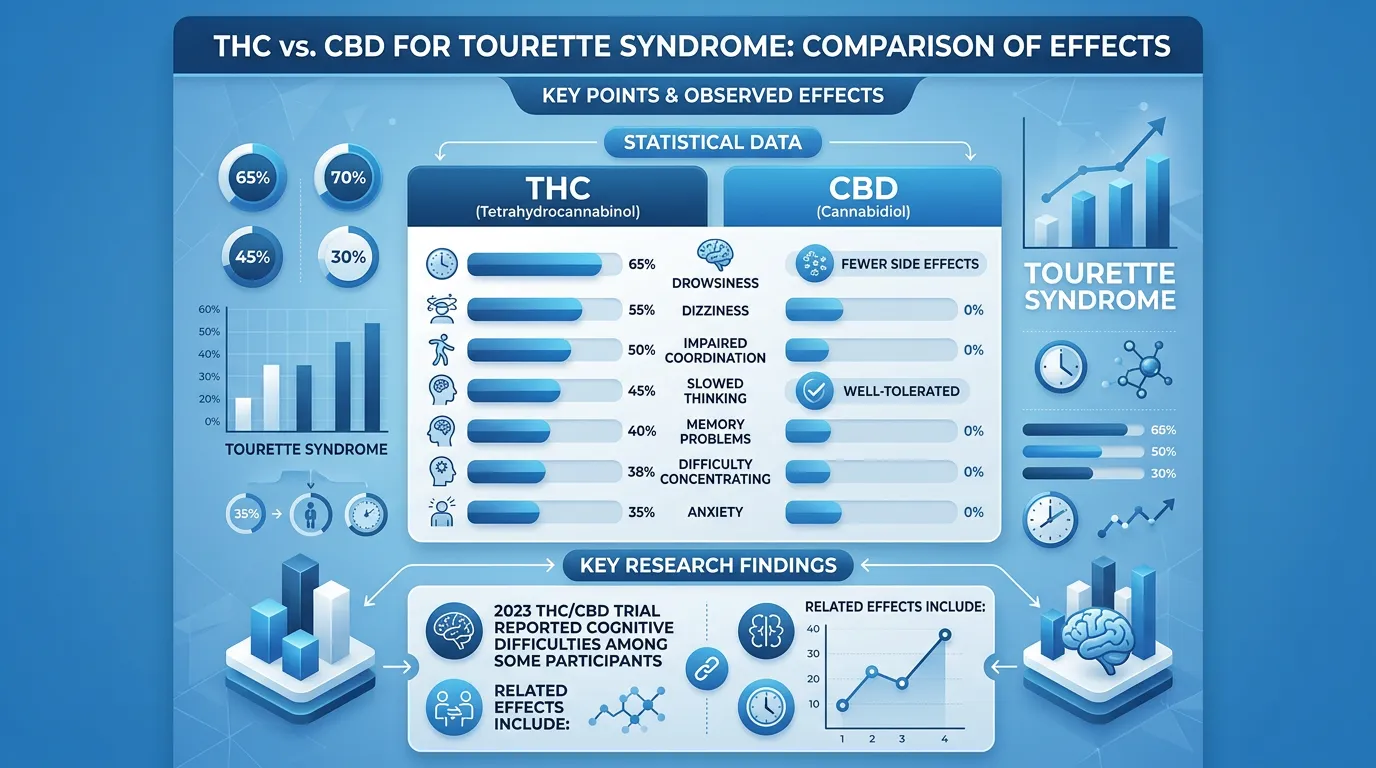
Potential THC-related effects include drowsiness, dizziness, impaired coordination, slowed thinking, memory problems, difficulty concentrating, and anxiety. The 2023 THC/CBD trial specifically reported cognitive difficulties among some participants.
CBD does not produce the same intoxicating effects as THC. It has attracted interest because researchers are investigating whether it can influence cannabinoid effects and tolerability. However, current evidence does not establish CBD alone as an effective Tourette treatment.
Some modern research has examined THC and CBD together. The 2023 randomized crossover trial used a THC/CBD oral oil and found a greater reduction in tic severity during active treatment than placebo. That finding does not establish that the same product, ratio, or dose is appropriate for every patient.
State Eligibility for Medical Marijuana and Tourette Syndrome
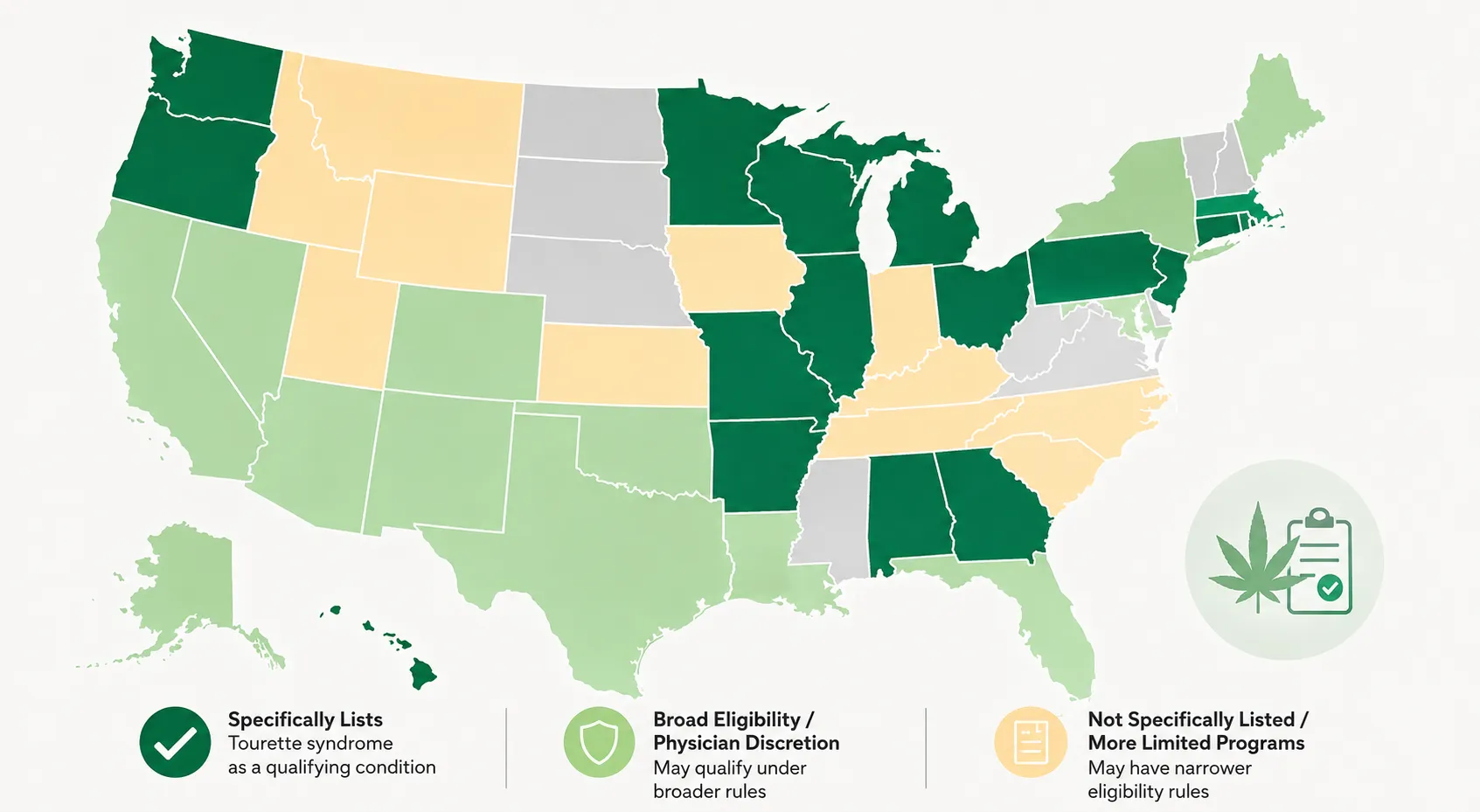
Medical marijuana eligibility is determined by state law. A Tourette syndrome diagnosis does not automatically qualify someone for a medical marijuana card everywhere in the United States.
Some states specifically list Tourette syndrome as a qualifying condition. Others use broader categories or allow physicians more discretion.
LeafyRX’s qualifying conditions by state resource can be used as a starting point for checking the rules where you live.
States That Specifically List Tourette Syndrome
Several state medical cannabis programs specifically recognize Tourette syndrome. The current LeafyRX state eligibility research identifies the following states and eligibility pathways.
| State | Tourette syndrome eligibility |
|---|---|
| Alabama | Specifically listed |
| Arkansas | Specifically listed |
| Connecticut | Specifically listed |
| Georgia | Specifically listed under state program rules |
| Illinois | Specifically listed |
| Michigan | Specifically listed |
| Minnesota | Specifically listed |
| Missouri | Recognized through qualifying-condition rules |
| New Jersey | Specifically listed |
| North Dakota | Specifically listed |
| Ohio | Specifically listed |
| Pennsylvania | Specifically listed |
| Rhode Island | Covered under qualifying-condition rules |
| Virginia | Physician-discretion pathway |
Several state medical cannabis programs specifically recognize Tourette syndrome. The current LeafyRX state eligibility research identifies Alabama, Arkansas, Connecticut, Georgia, Illinois, Michigan, Minnesota, Missouri, New Jersey, North Dakota, Ohio, Pennsylvania, Rhode Island, and Virginia as states with specific or broader pathways relevant to Tourette syndrome.
Eligibility language differs between states. Some specifically name Tourette syndrome, while others use broader qualifying-condition or physician-discretion language. Patients should verify the current program requirements before applying.
States With Broader Eligibility Pathways
Not every state requires Tourette syndrome to appear on a closed qualifying-condition list.

Some states use broader physician-based eligibility pathways. The table below highlights several examples and links to the relevant LeafyRX state pillar pages.
| State | Eligibility pathway | LeafyRX state page |
|---|---|---|
| California | Broad physician-based eligibility for qualifying medical conditions and persistent symptoms | California |
| Florida | Broader physician eligibility may apply in addition to the state’s listed conditions | Florida |
| New York | Practitioner certification for conditions the practitioner determines may benefit from medical cannabis | New York |
| Texas | Compassionate Use Program with physician certification and state registry | Texas |
This distinction matters because not being specifically named on a state’s list does not always mean that a patient has no pathway to medical cannabis. State law, physician requirements, age restrictions, documentation, and telehealth rules can change.
What Do You Need to Qualify for a Medical Marijuana Card?
Depending on the state, patients may need a Tourette syndrome diagnosis, medical records, physician documentation, treatment history, current medications, government-issued identification, proof of residency, physician certification, state registration, an application fee, and caregiver information where applicable.
Some states have additional requirements for minors or require specific physician relationships or documentation.
A diagnosis can support an application where Tourette syndrome qualifies, but a diagnosis does not guarantee certification. A licensed physician must determine whether medical cannabis is appropriate under the rules that apply to the patient.
How to Get Your Medical Marijuana Card for Tourette Syndrome
-
Check Your State’s Eligibility. Confirm whether Tourette syndrome is specifically listed or whether your state provides another eligibility pathway.
-
Gather Your Medical Information. Prepare your diagnosis, tic history, current symptoms, treatment history, medication list, relevant medical records, and information about co-occurring conditions.
-
Complete Your Medical Evaluation. If your state permits telehealth certification, you may be able to meet with a licensed physician online. Discuss your diagnosis, symptoms, medical history, medications, treatment goals, potential benefits, and risks.
-
Receive Physician Certification. If the physician determines that you meet the state’s requirements and medical cannabis is appropriate, they can complete the required certification.
-
Complete Your State Application. Submit the certification, identification, proof of residency, photograph, fee, and any other documents required by your state.
-
Receive Your Medical Cannabis Authorization. Once approved, you can access medical cannabis according to your state’s rules. Product types, possession limits, dispensary access, purchase limits, and renewal requirements vary.
Medical Marijuana for Tourette Syndrome: Safety and Side Effects
Potential benefits of cannabis need to be considered alongside possible adverse effects.
Possible effects include drowsiness, dizziness, impaired coordination, slowed thinking, memory problems, difficulty concentrating, anxiety, mood changes, and increased heart rate.
The 2023 randomized THC/CBD trial reported cognitive difficulties such as slowed mentation, memory lapses, and poor concentration during active treatment.
This is particularly important when Tourette syndrome occurs alongside ADHD, anxiety, OCD, sleep problems, or other neurological and psychiatric symptoms.
Cannabis and ADHD Symptoms
ADHD commonly occurs alongside Tourette syndrome.
Because THC can affect attention, memory, and concentration, patients with ADHD should discuss potential cognitive effects with a healthcare provider before considering cannabis.
Cannabis should not be assumed to improve ADHD symptoms simply because it may affect tic severity.
Cannabis and Anxiety
THC affects people differently. Some people report relaxation, while others experience increased anxiety, particularly at higher doses.
If anxiety is one of your main concerns, discuss the potential effects of THC with a healthcare professional rather than assuming cannabis will reduce anxiety.
Cannabis and Prescription Medications
Cannabinoids can interact with prescription medicines.
Tell your healthcare provider about all medications, supplements, and cannabis products you use. This is particularly important if you take medication for tics, ADHD, OCD, anxiety, depression, sleep, seizures, or other neurological conditions.
Do not stop or change a prescribed medication because you are considering medical marijuana.
Medical Marijuana and Other Tourette Treatments
Medical marijuana should not automatically replace established Tourette syndrome treatment.
Treatment can include behavioral approaches such as Comprehensive Behavioral Intervention for Tics (CBIT), medications, psychotherapy for co-occurring conditions, or other interventions depending on symptom severity.
The appropriate approach depends on age, symptoms, co-occurring conditions, treatment history, and preferences. If cannabis is being considered, discuss how it would fit alongside existing care.
Why an Online Medical Card Evaluation May Be an Option
For patients who live in states that permit telehealth certification, an online evaluation may reduce the need to travel to a physical clinic.
This may be useful for patients who have transportation challenges, work or school scheduling constraints, or frequent healthcare appointments.
The medical evaluation still needs to follow the requirements of the state where the patient lives.
Tourette Syndrome State Eligibility Snapshot
Conclusion
Research into medical marijuana for Tourette syndrome is becoming more substantial, but important questions remain.
Small randomized trials have found potential reductions in tic severity with THC-containing treatments, while newer systematic reviews have reported promising effects on both tics and premonitory urges. However, the evidence base is still relatively small, and researchers continue to call for larger, placebo-controlled studies to establish effectiveness, appropriate dosing, cannabinoid combinations, and long-term safety.
Medical marijuana has not been established as a cure for Tourette syndrome or a replacement for behavioral therapy, prescription treatment, or other evidence-based care.
For adults considering cannabis, the most useful next step is to determine whether Tourette syndrome qualifies under the medical cannabis laws in their state and discuss potential benefits, side effects, and medication interactions with a licensed healthcare professional.





 Ask ChatGPT
 Ask Claude
 Ask Perplexity